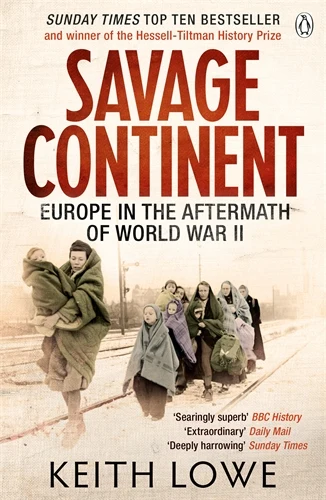
01 / 06 Savage Continent Europe in the Aftermath of World War II Keith Lowe Keith Lowe follows Europe beyond the surrender, through displacement, reprisals, ethnic cleansing, and the struggle to rebuild. His subject is the unstable peace that followed the fighting, when liberation and violence could exist side by side. The aftermath of war: how societies emerge from destruction, and why the end of fighting does not bring an immediate return to ordinary life. Publisher & Buying Options ↗ Penguin paperback, 2013 Selected Passages From Savage Continent “ It is not our remembering the sins of the past that provokes hatred, but the way in which we remember them. Keith Lowe Savage Continent “ In wartime the worst atrocities do not generally occur in battle, but after the battle is over. A soldier might be able to avenge his fallen comrades by fighting ferociously, but he is in a much better position to do so once his enemy is defeated, disarmed and at his mercy. Keith Lowe Savage Continent “ Revenge was a fundamental part of the bedrock upon which postwar Europe was rebuilt. Everything that happened after the war, and everything that will be described in the rest of this book, bears its hallmark: to this day, individuals, communities and even whole nations still live with the bitterness born of this vengeance. Keith Lowe Savage Continent
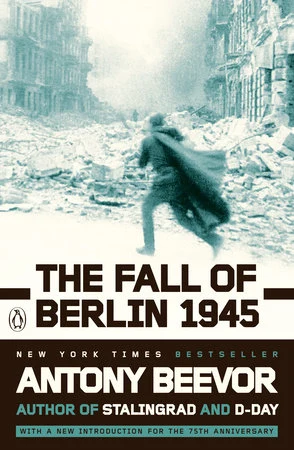
02 / 06 The Fall of Berlin 1945 Antony Beevor Antony Beevor reconstructs the final Soviet advance and the collapse of Nazi Berlin through the experiences of soldiers and civilians. Military decisions meet the human realities of destruction, revenge, flight, and survival. The final campaign in the East, and the people caught between a collapsing regime and an advancing army. Publisher & Buying Options ↗ Penguin paperback, 2003 Selected Passages From The Fall of Berlin 1945 “ One important lesson is that one should be extremely wary of any generalization concerning the conduct of individuals. Extremes of human suffering and even degradation can bring out the best as well as the worst in human nature. Antony Beevor The Fall of Berlin 1945 “ Goebbels’s propaganda did not simply dehumanize Jews, commissars and the whole Slav people, it made the German people fear and hate them. Antony Beevor The Fall of Berlin 1945 “ Women queued for a handout of butter and dry sausage, while men emerged only to line up for an issue of schnapps. It seemed to be symbolic. Women were concerned with the immediacy of survival while men needed escape from the consequences of their war. Antony Beevor The Fall of Berlin 1945
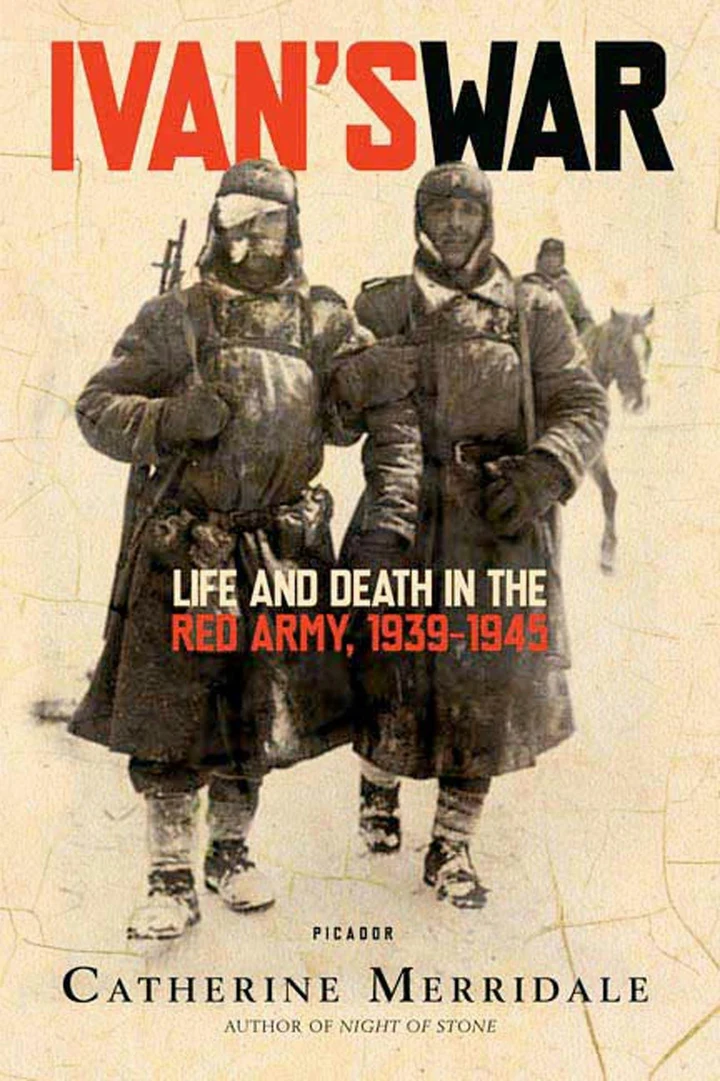
03 / 06 Ivan’s War Life and Death in the Red Army, 1939–1945 Catherine Merridale Drawing on archives, interviews, letters, and diaries, Catherine Merridale examines the lives of Red Army soldiers. She follows their experience of combat, their arrival in Berlin, and the hopes and disappointments of coming home. The war from the ranks: soldiers’ beliefs, fears, endurance, and the distance between official memory and lived experience. Publisher & Buying Options ↗ Picador paperback, 2007 Selected Passages From Ivan’s War “ Soldiers had various ways of dealing with the real face of capitalism. Some were envious, some intrigued. Later, when they entered Germany, their main reaction would be rage. No one could understand why wealthy Germans had wanted to invade their neighbors to the east, why anyone who had this much would ever fight for more. Catherine Merridale Ivan’s War “ For all the rhetoric of unity, however, close friendships still aroused suspicion in police circles. The NKVD monitored soldiers’ conversations at the front, while the Special Section and its successor, SMERSh, whose name was an acronym for the Russian expression “death to spies,” pursued each rumor of dissension. Catherine Merridale Ivan’s War “ It was rage that gave the troops their energy. Everything, from the deaths of beloved friends to the burning of cities, from the hunger of the children back at home to the fear of facing yet another hail of shells, everything—even the wealth of bourgeois homes—was blamed on the Germans. Catherine Merridale Ivan’s War
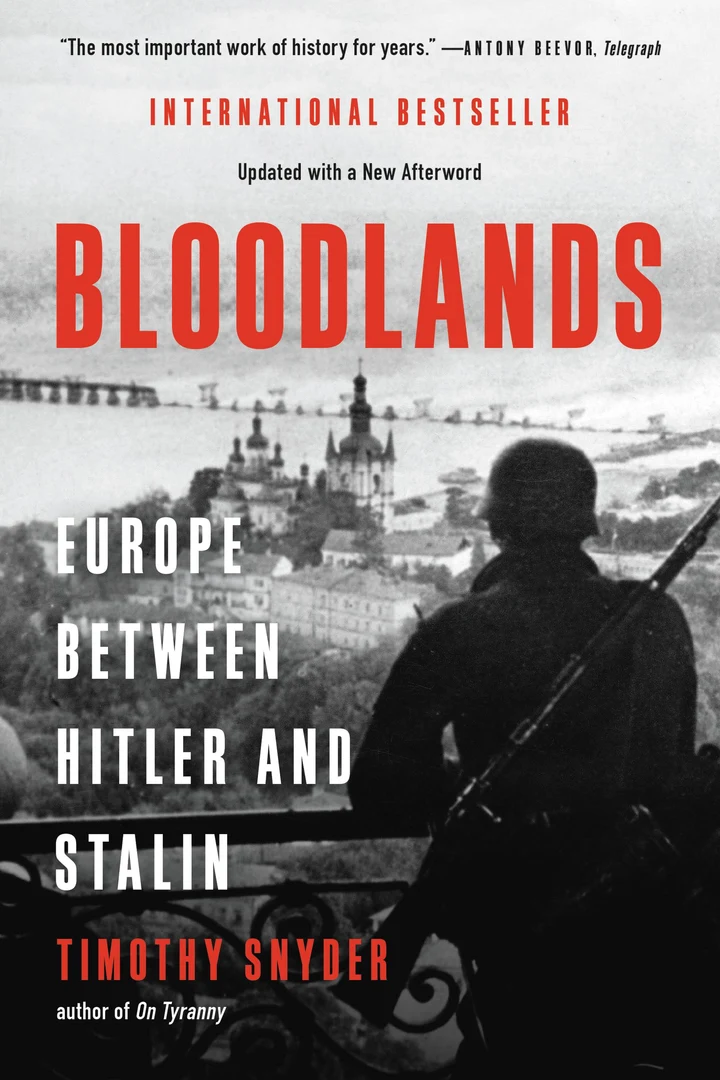
04 / 06 Bloodlands Europe Between Hitler and Stalin Timothy Snyder Timothy Snyder brings Nazi and Soviet policies of mass killing into a shared geographical history of Eastern Europe. The book centres the people living in the territories where the two regimes’ ambitions and violence overlapped. The wider geography of mass violence, reaching beyond battlefields into occupied communities and civilian lives. Publisher & Buying Options ↗ Basic Books paperback, 2022 Selected Passages From Bloodlands “ The horror of the twentieth century is thought to be located in the camps. But the concentration camps are not where most of the victims of National Socialism and Stalinism died. These misunderstandings regarding the sites and methods of mass killing prevent us from perceiving the horror of the twentieth century. Timothy Snyder Bloodlands “ The true Nazi agricultural policy was the creation of an eastern frontier empire. The German agricultural question would be resolved not within Germany but abroad: by taking fertile land from Polish and Soviet peasants—who would be starved, assimilated, deported, or enslaved. Timothy Snyder Bloodlands “ Of the fourteen million civilians and prisoners of war killed in the bloodlands between 1933 and 1945, more than half died because they were denied food. Timothy Snyder Bloodlands
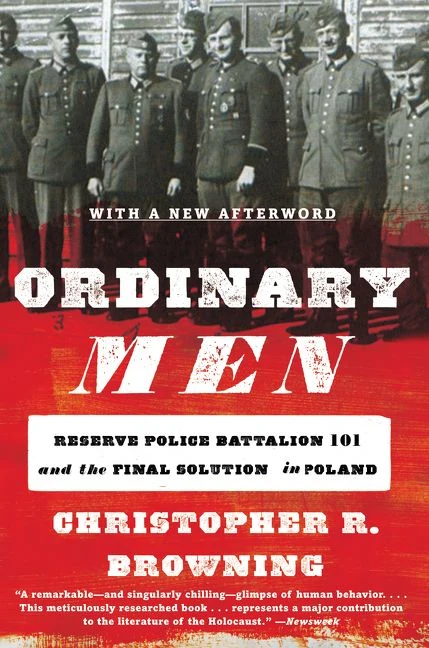
05 / 06 Ordinary Men Reserve Police Battalion 101 and the Final Solution in Poland Christopher R. Browning Christopher R. Browning studies a German police battalion’s participation in the murder and deportation of Polish Jews. He examines the roles of conformity, authority, and individual choices in turning members of the unit into perpetrators. The machinery of occupation at the level of individual perpetrators, and the question of responsibility within a group. Publisher & Buying Options ↗ Harper Perennial paperback Selected Passages From Ordinary Men “ The fundamental problem is to explain why ordinary men—shaped by a culture that had its own particularities but was nonetheless within the mainstream of western, Christian, and Enlightenment traditions—under specific circumstances willingly carried out the most extreme genocide in human history. Christopher R. Browning Ordinary Men “ As important as the lack of time for reflection was the pressure for conformity—the basic identification of men in uniform with their comrades and the strong urge not to separate themselves from the group by stepping out. Christopher R. Browning Ordinary Men “ Once the killing began, however, the men became increasingly brutalized. As in combat, the horrors of the initial encounter eventually became routine, and the killing became progressively easier. In this sense, brutalization was not the cause but the effect of these men’s behavior. Christopher R. Browning Ordinary Men
06 / 06 Berlin Underground 1938–1945 Ruth Andreas-Friedrich Ruth Andreas-Friedrich’s diary records everyday life and anti-Nazi resistance in wartime Berlin. A journalist and member of a resistance group, she describes the choices and dangers of helping people persecuted by the regime. A civilian witness inside Berlin: the daily work of resistance and the risks of refusing to cooperate. Edition & Library Options ↗ Paragon House edition, 1989; translated by Barrows Mussey Selected Passages From Berlin Underground Quotations to come.